

As we mark the International Day of Care and Support, Misturah Owolabi-Adeyemi – MA Gender & Development student (class of 2027) and Commonwealth Shared Scholar – reflects on how we talk about care and how this shapes understandings of care, disability and independence. Misturah calls for us all to recognise care as essential work and to build systems that allow people to give and receive care with dignity.
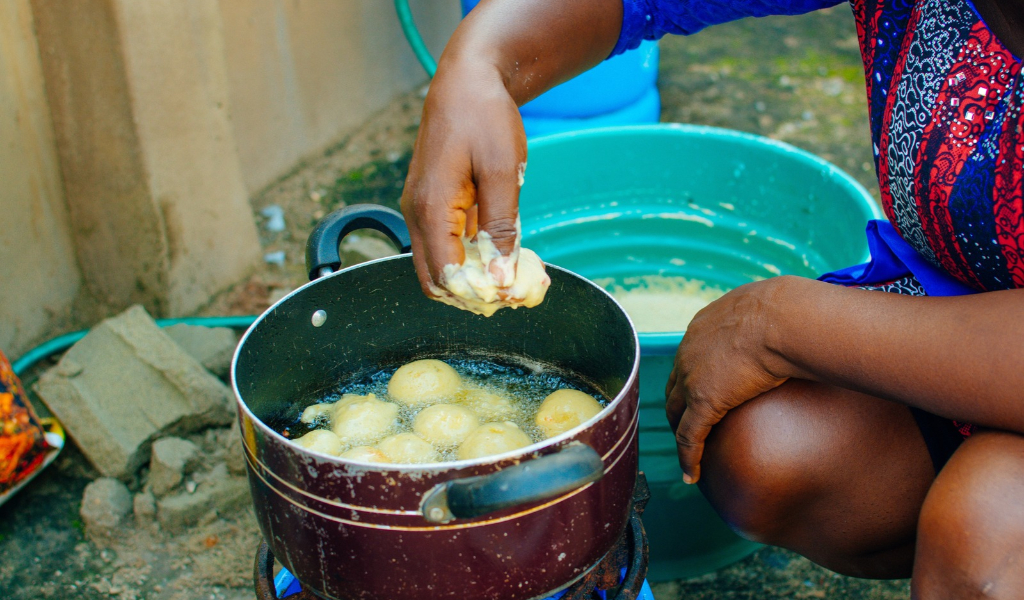
Often, we describe care as an act of kindness, a favour or a sacrifice, celebrating the generosity of the person providing it while expecting the person receiving it to be grateful. But what happens when care is framed as charity? What does that say about the person receiving it, and how do we value the people providing it?
How language shapes understandings of care
Through my work with women with disabilities in Nigeria, I became aware of how language shapes our understanding of care, dignity and dependence. These experiences inspired my book, Before You Say That, a dictionary of disability-inclusive language, a guide I wrote about the words we use when we talk about disability and the assumptions they carry.
People with disabilities do not want to be treated as charity cases. They want to participate in society, make decisions and pursue their ambitions with dignity. Needing assistance should not mean having to prove that one deserves support. Consider the difference between two terms: ‘caregiver’ and ‘support worker’. Although individual preferences and contexts differ, the terms can shape how we understand the relationship. Calling someone a support worker can recognise the professional skills and boundaries involved, while reminding us that disabled people should direct their own support. They are not passive recipients of care, and receiving assistance does not mean surrendering control over their lives.
Recognising paid and unpaid care
This conversation also goes beyond language. When we frame care as kindness or personal sacrifice, we risk overlooking the labour involved and treating support as a favour rather than something people may need to live with dignity.
Care is important to how our families, communities and economies function. Yet, the people who provide it often receive little recognition, whether they are paid workers or unpaid family members. The care economy includes both paid and unpaid care work, including the people, services and resources that make care possible. It raises important questions about who provides care, who pays for it, and whose time and labour are valued.
Consider the women who spend hours caring for children, older relatives or family members with disabilities without receiving a salary. Consider professional care workers whose jobs demand patience, skill and emotional labour but who may face low wages, insecure employment, long hours and limited recognition. Why is this work, which is so essential to our collective wellbeing, so often undervalued?
Just because we provide support and care to people we love should not render that labour invisible. Care provided within families still requires time, energy and effort. When this work goes unpaid, its costs are absorbed by those providing it, often at the expense of their education, employment, rest and economic independence.
This brings into sharp focus gender inequality. Across many societies, women carry a disproportionate share of unpaid care responsibilities. Caring for relatives and managing household needs are often treated as natural extensions of women’s roles rather than work that deserves recognition and support.
Addressing this inequality requires us to rethink how care responsibilities are distributed. Families, governments, employers and communities all have a role to play in ensuring that care does not unfairly restrict women’s opportunities or leave them carrying responsibilities without adequate support.
We must also recognise the people who provide care professionally. Care workers deserve fair wages, reasonable working hours, safe workplaces, social protection and respect for their skills. We cannot claim to value care while overlooking the working conditions of those who make it possible. Recognising carers, however, should never require us to portray the people they support as burdens. Both things can be true: care workers deserve decent working conditions and fair compensation, while people receiving care deserve dignity, autonomy and respect.
Reframing independence
We also need to rethink what independence means. Many of us celebrate independence as the ability to do everything without assistance, even though our daily lives depend on the labour of other people. We rely on transport workers, food producers, cleaners and countless others to make our lives possible. Yet, needing personal assistance can still become a reason to question a disabled person’s autonomy. Needing support is not the same as losing the right to make decisions about your own life. A person can require assistance and still have preferences, ambitions and boundaries. Care should enable people to live with dignity, not become a reason to speak over them or make decisions on their behalf without their consent.
The language of care matters
This is why the language of care matters. Our words reveal whose labour we value, whose choices we respect and whose contributions we make visible. Changing our language alone will not solve the challenges surrounding care, but it can help us question the assumptions that sustain them.
We also need accessible environments, adequate public services, fair employment conditions for care workers and policies that recognise unpaid care. We must also challenge the gender expectations that leave women carrying a disproportionate share of this work.
Through my work in the disability community and the writing of Before You Say That, I have come to understand that how we talk about care is connected to how we provide it and how we value the people involved.
This International Day of Care and Support, I hope we move beyond simply celebrating acts of kindness. I hope we recognise care as essential work, value paid and unpaid caregivers, address the inequalities that shape who carry the responsibility, and build systems that allow people to give and receive care with dignity.
Care should not depend on charity and providing it should not require people to sacrifice their own wellbeing. If care sustains our societies, valuing it means respecting the people who receive it, recognising the people who provide it, and sharing responsibility for making it possible.
Studying at IDS
My work in development communications and disability advocacy in Nigeria has shown me what is possible when we challenge stereotypes and create space for people who are often excluded. Through the advocacy organisations I lead: Misty Glam Company, IncluNorm, IncluNorm Foundation, IncluNorm Media and IncluNorm Fashion, I have built platforms for disability education, produced documentaries, and used adaptive fashion, runway shows, inclusive pageants and creative storytelling as tools for advocacy for women with disabilities. This work has changed how I think about inclusion, especially the ways gender and disability shape people’s experiences, opportunities and responsibilities, including the often-overlooked work of care.
I wanted to understand these issues beyond my own practice and explore how we can create change on a wider scale. That was one of the reasons I chose to study MA Gender and Development at IDS. As a Commonwealth Shared Scholar, I want to build on my years of practical experience, increase my understanding of how gender and disability intersect with inequality, and strengthen my research skills so I can influence the systems and decisions that affect the lives of women with disabilities.
For me, studying at IDS is an opportunity to connect the work I do on the ground with wider conversations about gender, power, care and development, and to bring that knowledge back into the initiatives and communities I work with.
Interested in learning more about the MA Gender & Development at the Institute of Development Studies? Find out more: