
On 10 July, alumni from the IDS MPhil in Development Studies class of 2006 (MP28) gathered in Brighton for a 20-year reunion to reconnect with classmates and reflect on the different paths their careers have taken since graduating across the international development sector and beyond.
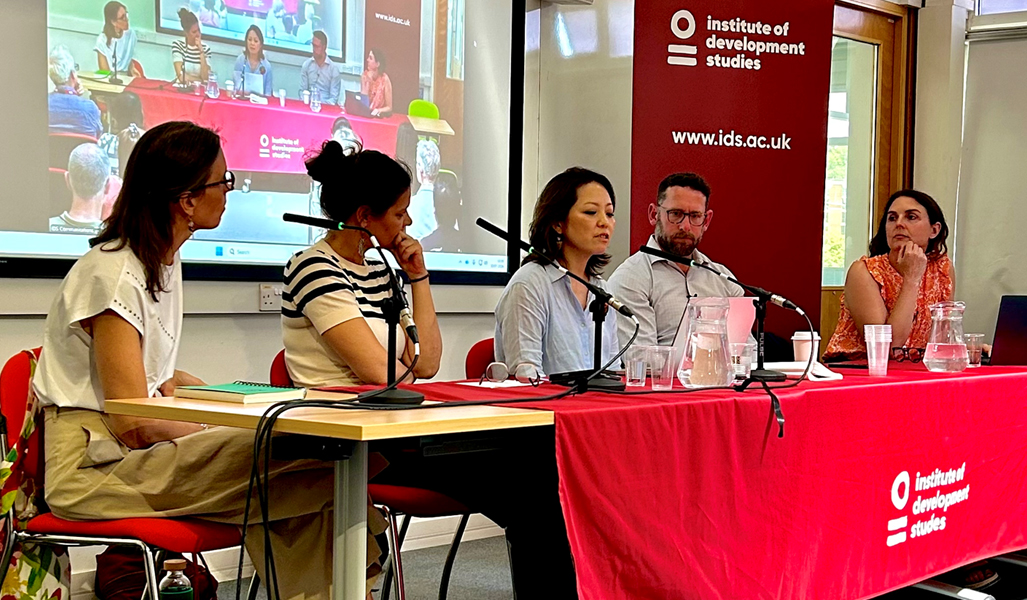
The reunion formed part of IDS’s 60th anniversary celebrations and included a public event, International cooperation amid geopolitical rupture, which examined whether proponents of international development and universal human rights can continue to play a significant role in the current context of geopolitical rupture.
Back together after 20 years
The event panel featured MP28 alumni who now work across international organisations, academia, humanitarian response, democracy and human rights, and independent consultancy.
IDS Research Fellow (and MP28 alum) Santiago Ripoll opened the event by reflecting on how the international development landscape has shifted since the cohort graduated. When MP28 were undertaking their studies 20 years ago, many students expected clear career pathways into NGOs, donor agencies, governments and international organisations. Yet today’s development professionals operate in a far more complex environment shaped by geopolitical tensions, shrinking aid budgets and growing challenges to international cooperation.
Reflecting on development amid geopolitical change
The discussion highlighted the diversity of careers pursued by the MP28 cohort and the enduring influence of an IDS education. Speakers included:
- Nick Benequista, Senior Director of Applied Research at the National Endowment for Democracy;
- Hisae Kato, Teaching Fellow in Development Studies at SOAS University of London and an international development consultant;
- Anne Vallant, Deputy Country Director for the World Food Programme in Lebanon
- Sarah Coll-Black, Senior Economist at the World Bank; and
- Patricia Romero-Abreu Kaup, an independent consultant focusing on wellbeing and trauma-informed approaches to social change.
Throughout the conversation, speakers reflected on the challenges facing international development today while drawing on their own professional experiences, including democracy and media freedom, humanitarian response and social protection systems, teaching, research, consultancy and approaches to resilience and wellbeing.
Many paths, one shared IDS experience
All of the panellists reflected on the value of bringing together alumni whose careers have developed in very different directions. The diversity of career paths taken just by the panellists alone really demonstrated the wide range of opportunities that can emerge from a background in development studies, spanning academia, international organisations, humanitarian practice and other professional fields.
The speakers also explored the question of how development practitioners can continue to contribute in this rapidly changing context. While panellists offered differing perspectives, there was broad agreement on the importance of continued engagement, learning and collaboration across sectors and borders.
Twenty years on, the conversation continues
Final reflections from participants focused on the enduring spirit of IDS, with its willingness to embrace diverse viewpoints, question assumptions and recognise that there is rarely a single solution to complex global challenges.
As this reunion demonstrates, there are a multitude of varying career path after IDS. Twenty years on, the MP28 cohort continues to contribute to social change in many different ways, from international policymaking and humanitarian action to academic research, consultancy and community engagement.
The reunion and event provided an opportunity not only to reconnect with old friends, but also to celebrate the continuing impact of IDS alumni around the world and the many ways they are helping to shape responses to some of today’s most pressing development challenges.
Interested in studying at IDS?
Key contacts