
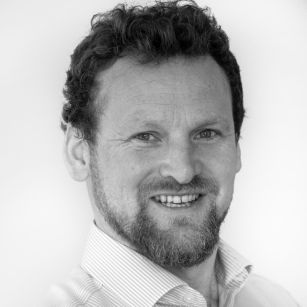
Dr Stephen Thompson, co-convenor of the MA Development Studies, is an IDS Research Fellow who has worked across the disciplines of geography and international development since 2007. His research mainly focuses on disability inclusion.

Develop the analytical and practical skills required to address some of today’s most pressing global challenges including inequality, sustainability and security with a Master’s in Development Studies.
Based at IDS, you’ll learn how to approach development problems with creativity, confidence and the ability to work collaboratively.
You’ll develop an understanding of the main debates in development, and engage in informed and critical ways with professionals from diverse backgrounds.
The Institute of Development Studies (IDS) delivers world-class research, learning and teaching that transforms the knowledge, action and leadership needed for more equitable and sustainable development globally. IDS has been ranked first in the world for development studies, in partnership with the University of Sussex for ten years in a row.
A hallmark of this degree is the diversity of cultures, experience and perspectives that our students bring. Successful applicants will have some practical experience in development alongside an interest in critical academic enquiry. We welcome applicants with a broad range of career trajectories.
The academic year starts in September and has three terms.
This degree offers a wide choice of module options, allowing students flexibility to choose their area of interest and grow intellectually within the overall degree framework.
Core modules are taken by all students on the course. They give you a solid grounding in your chosen subject and prepare you to explore the topics that interest you most.
Alongside your core modules, you can choose options to broaden your horizons and tailor your course to your interests. This list gives you a flavour of our options, which are kept under review and may change, for example in response to student feedback or the latest research.
In the summer term you will research and write a 10,000 word dissertation under the supervision of a faculty member.
While it’s our aim for students to take their preferred combinations of options, this can’t be guaranteed and will be subject to timetabling. Options may be grouped and if so, students will be able to choose a set number of options from the selection available in any particular group.
The links below will take you to the University of Sussex’s website to find out more about each module.
Dissertation Development Studies (core) OR IDS Placement-based Dissertation (core)
Rebecca Webb joined IDS in 2018 to study an MA in Development Studies. In this candid interview she tells us how she came to be here, what it’s like to study at IDS, and her hopes for the future.

Successful applicants will have a first or upper second-class (2.1) undergraduate honours degree in the social sciences or a related subject, and preferably one year of development-related work experience. Applications must be accompanied by a detailed two-page personal statement, explaining why you are applying for the degree and the relevance of your previous experience.
The course is taught in English. To derive the maximum benefit from the course, participants should be proficient in English and able to take an active part in discussions. The minimum requirement is, for example, an IELTS grade of 7.0 overall and no less than 6.5 in each section of the IELTS test. For detailed information on English language requirements for international students please see the University of Sussex website.

We’ll make all reasonable efforts to provide you with the courses, services and facilities as described here. However, we may need to make changes due to significant disruption.