
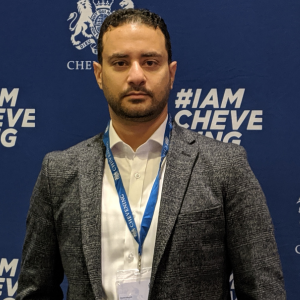
Wadhah Hubaishi is a Chevening Scholar and an IDS alum from the MA Development Studies programme (class of 2019-20). Today, he leads humanitarian response operations across the Middle East for World Central Kitchen, coordinating emergency food responses across Gaza, Lebanon, Jordan and beyond. Drawing on his own Chevening journey, Wadhah shares five lessons for applicants looking to tell their story, demonstrate their potential and stand out in a highly competitive process.
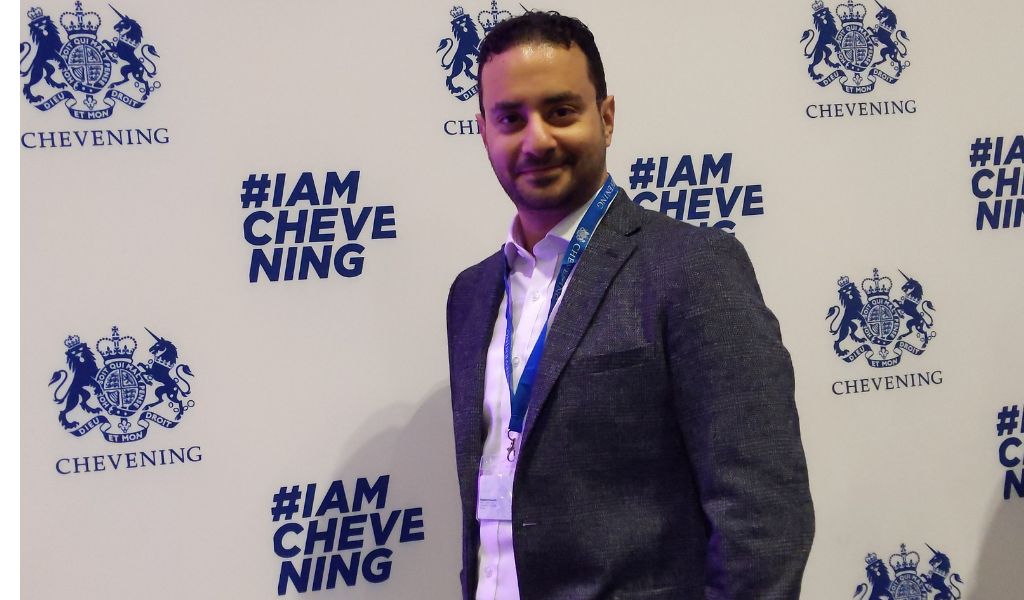
In 2019, the UK government gave me something I did not fully understand the value of at the time: the chance to step away from the field, sit in a classroom in Brighton, and think deeply about the work I was already doing. I came to IDS through Chevening, and that year changed how I see problems, how I lead, and how I understand the communities I serve. Today, the thinking, networks and confidence I gained through that experience continue to shape my work.
For those considering Chevening, particularly emerging leaders who already have a vision of the change they want to make, here are five things I learned from my own application and experience.
1. Tell the story of ‘you’
Chevening is extremely competitive. In my year, 2019–20, around 1,500 scholars were selected from approximately 50,000 applications. Your application therefore needs to be focused and memorable.
My advice is to use the storytelling method. Tell the story of you. Start with your work background and relevant experience. What brought you to the point where you realised there was something more you needed to learn to achieve your next big ambition? What was that ‘aha’ moment? Many applicants use vague terms when describing their plans after graduation, such as: “I want to benefit my country and its people.” But that is not enough. How exactly do you plan to do that? What specifically are you trying to achieve and what objectives do you need to achieve this?
Do not be afraid to focus. Applicants can sometimes worry that being too specific will pigeonhole them, so they keep their statements general. But when you are competing with thousands of other applicants, being general makes it harder to stand out. Your previous experience, your ambitions, the education you are seeking and what you intend to do afterwards should come together as one coherent story. There can be no room for vagueness or uncertainty.
2. Think about the multiplier effect
Your plans after graduation should not only be about what the scholarship will do for you. A plan focused simply on “bettering myself” is unlikely to say enough about the kind of change you want to make. Instead, think about the multiplier effect. How will what you learn affect others and create positive change for the people around you? What value will you bring to your wider community?
You should be able to show that you want to be an agent of positive change, rather than simply a recipient of an opportunity.
3. Use the ‘STAR’ method
When demonstrating leadership and influence from your own experience, the STAR method – Situation, Task, Action and Result – can help you tell those stories clearly.
Think about a real situation you faced, what needed to be done, the action you personally took and what happened as a result. The important part is showing your own contribution and demonstrating the skills they required.
4. Be intentional about your school of choice
Be focused on your school of choice. In my own work, I had seen first-hand the limitations of top-down approaches to development. I had seen what could happen when decisions were made by elites about what people in villages and towns needed, without properly involving the communities themselves.
That is how I found the participatory approach to development and the work done by Robert Chambers. His ideas and vison led me to IDS. That was my story. Your school/programme of choice must have a story. Not chosen randomly because of its ranking. Can you demonstrate that you researched the school? And its faculties? Or did you just pick a school based on some random ranking somewhere on the internet? It is important to be specific about why you want to study there.
5. Interview the interviewer
When I had my interview in 2019, Brexit was a major issue in the UK. I asked my interviewers how Brexit might affect international faculty members travelling to and working in the UK, and what the consequences could be for UK higher education. It was a concerning event back then and I was genuinely interested about this. The interviewers appreciate this. You should not be a passive interviewee.
Prepare to ask relevant questions and share with the interviewers how you plan to benefit your classmates with your experience. During my interview, I told the panel that I wanted to become a class representative. I was subsequently elected as one at IDS and became an International Student Ambassador at the University of Sussex.
Studying in the UK should not be about being a passive recipient of an education. Think about what you will contribute to your classroom, university and wider community as well.
Final thoughts
A strong Chevening application comes down to having a clear sense of direction. Know where you have come from. Know what you are trying to achieve. Understand why a UK education, and the particular programme you have chosen, is relevant to that ambition. And be able to explain how you will use that experience to create positive change when you move forward.
If you’re considering applying for scholarship funding, or have been selected for a Chevening interview, we are running a free webinar offering support and guidance from successful scholarship applicants. You can sign up below to attend: