

The glacial collapse and catastrophic floods in Nepal and Tibet are not isolated tragedies. They reflect accelerating climate disruption that disproportionately affects countries and people least responsible for global emissions. Such cascading catastrophic events are not ‘natural disasters’. They are due to human-induced climate change, global warming and climate injustices, and also flawed development policies, including rampant property developments on vulnerable floodplains. They call for better disaster preparedness and investment in early warning systems. Most importantly, they require global action.
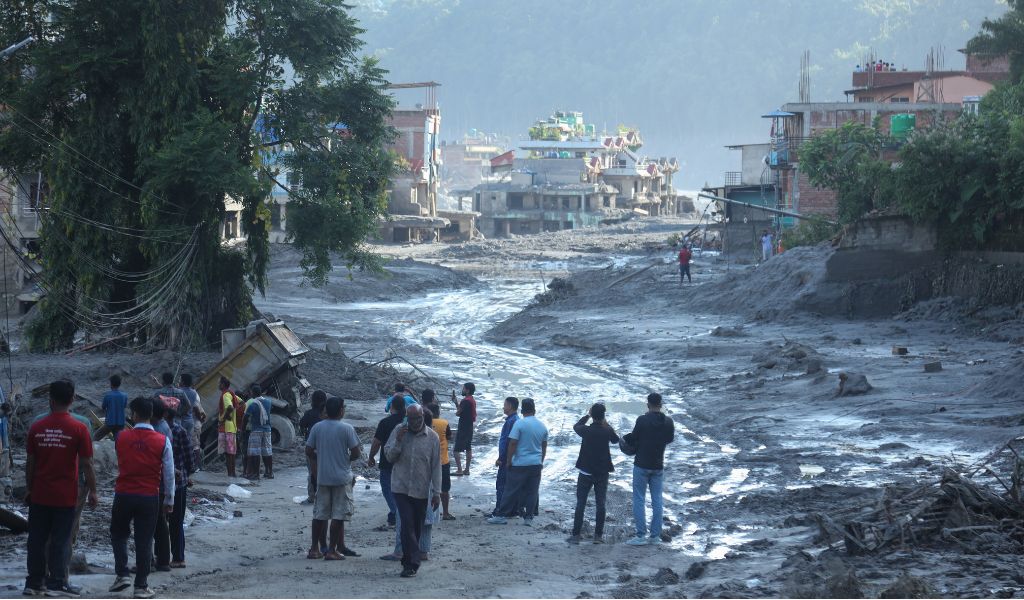
Due to global warming, high mountain peaks receive rainfall, instead of snow which make them unstable. Glaciers around the world, including in the Himalayas, are also melting at unprecedented rates, destabilising ecosystems and causing glacial collapse and ice-and-rock landslides, destroying settlements, villages and livelihoods in minutes.
Unlike when the Swiss glacier collapsed last year, and no one died due to early warning systems that were in place, the lack of early warning systems in Nepal mean that the death toll from this disaster is over 1000 people and rising, with more than 4000 missing. I can’t even begin to imagine what this tragedy must have been like for those affected, and who have lost loved ones and still waiting for new of those missing.
The UK’s role in global climate challenges
International development cannot be isolated from climate and environmental crises, and the UK needs to work in partnership with governments, multilateral institutions, scientific bodies and research institutions to put development and climate action at the heart of the government’s foreign policy.
The UK has long positioned itself as a leader in international development and climate action. Yet, recently, its commitments have fallen seriously short of what is required to address global development and climate challenges. UK Official Development Assistance (ODA) has been reduced to 0.3% of Gross National Income, way below the UN target of 0.7% for high income nations. Climate finance pledges have also been cut this year.
Foreign Secretary Ed Miliband spoke compellingly about the need to put the climate crisis and overseas development at the heart of UK international relations. My colleagues at IDS and I support this strong endorsement from the Foreign Secretary who was clearly very committed to addressing climate change when he was Energy Secretary.
However, the Foreign Secretary’s words will be hollow unless they are translated to action. It is important to dramatically increase UK commitments to climate finance, particularly funding for climate adaptation and loss and damage to support those living on the frontlines of climate change.
Countries like Nepal also require support in setting up early-warning systems and in developing resilient infrastructure in vulnerable mountain regions. As the Nepali Foreign Minister Shisir Khanal recently said, Nepal is one of the lowest contributors to greenhouse emissions yet is one of the biggest victims of global warming, and has called for a shift from pursuing ‘aid’ to seeking ‘justice and compensation’.
Domestic versus international pressures
The UK’s climate policy is increasingly torn between addressing domestic pressures, including the cost-of-living crisis, and global commitments to reduce emissions as well as supporting low-income countries in their efforts to tackle climate change. This is why we have seen contradictory policies recently which include the decision to raid the diminished aid budget to switch international climate finance grants to loans, to fund a bus fare cap. The UK cannot claim to have a leading role in the fight against climate change while cutting support to those already suffering its worst impacts.
A summer of heatwaves in the UK leading to wildfires, droughts and the health impacts of extreme heat should make it clear to all in Westminster that climate breakdown is affecting the UK too. This is why the UK must also commit to reducing emissions, including controversial plans around North Sea oil and gas drilling.
The UK once enjoyed soft power globally through its research and action on climate and development. This has been diminished in recent years due to budget cuts for research and development spending. The UK urgently needs to restore its role in supporting climate and development research, step up commitments to reduce emissions and champion the rights of communities facing irreversible climate impacts.
The recent glacial floods in Nepal and Tibet remind us that climate disruption is global, and highly unequal. The UK must act urgently. Anything less is a failure of responsibility.
A shorter version of this IDS Opinion was originally published as a letter in The Guardian.