In a previous blog, we asked where the pastoralists were at COP31 in Antalya. During the conference, I followed members of the Sarıkeçili Survival and Solidarity Association, local coordinators and partners in our research Pastoralism and Climate Action, led by IDS and Bilkent University. The Sarıkeçili pastoralists we work with were not invited to the Blue Zone or to any official meeting. On this enormous site there was no room for their tents, or for those of any other pastoralists. This is the International Year of Rangelands and Pastoralists, yet COP31 paid them almost no attention.
COP31 was the largest COP so far with over 90,000 participants. The conference was held on the huge 110-hectare EXPO 2016 site in Antalya, built at great cost and then left largely unused. Hosting COP meant a new round of heavy spending, including turning 30 hectares of farmland into a car park. Much of what mattered took place in the Blue Zone, which we could not enter. We caught the leaders’ photo calls, the celebrities and the well-known activists through the crowd. The protests from civil society and activists inside the Blue Zone gave us a lift, however.
The Green Zone felt more like a tourism fair. Handsome pavilions presented Türkiye’s rich history and cuisine, but decisionmakers did not bother to visit. The programme made it almost impossible to work out who was presenting when, and universities were allocated small cubicles side-by-side in a massive building.
13 November: Sarıkeçili in the Green Zone
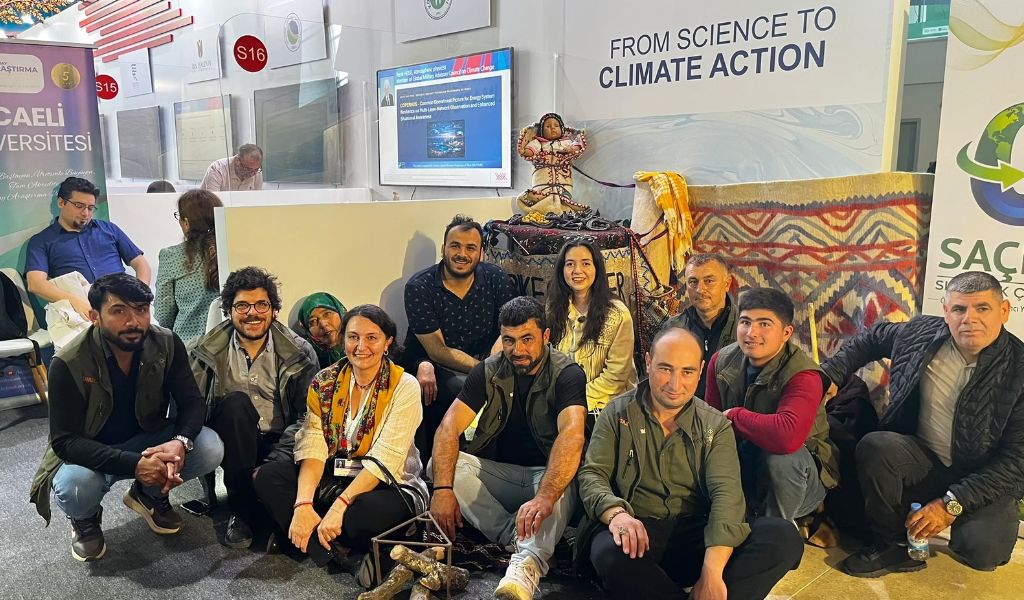
The Sarıkeçili pastoralists came to the Green Zone as invitees of Gizem Büyükgüner Sönmez, a doctoral researcher in architecture at Kocaeli University. Next to the university’s small stand, they laid out their felt rugs, woven sacks, oak firewood and the iron trivet they cook on – creating a small, familiar setting from their tents in this giant, alien building.
During a talk, they described daily life in tents in the forest, living in tune with nature. In the audience were university staff, young architecture students and a participant from Nigeria. People passing by stopped to listen too. Positively, several academics and university rectors said they would invite the Sarıkeçili to their own universities.
Afterwards we walked around the site together. The slogans such as “zero waste” and “from ancient lands, tomorrow we grow” on every wall clashed with the lived realities of pastoralists, and this upset them deeply. After a few hours there, we felt deep down that the COP was a lost cause.
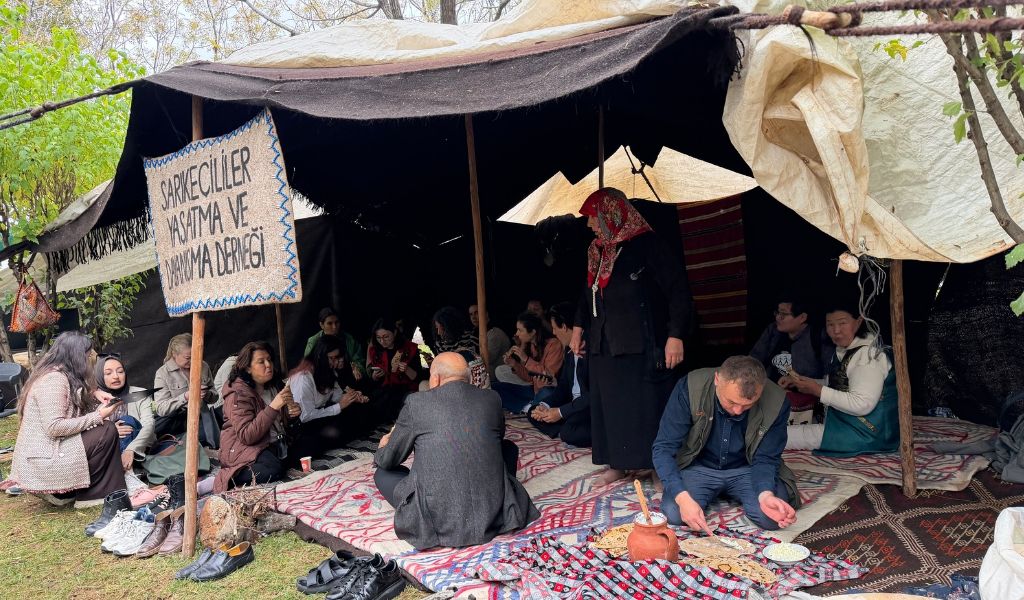
14 November: the black tent
The next morning, we went to Antalya Bilim University, where ICOMOS was leading a COP31 side event, ‘Cultural Heritage in Climate Action’. The Sarıkeçili put up their black tent on campus and, for five days, welcomed people inside.
They served sıkma (goat’s cheese wrapped in flatbread), tea, and ayran they had churned in a goatskin (yanlık). As they served, they talked about their lives, their migration and conditions at their seasonal camps. Pervin, the association’s president, emphasised that living as nomads is their right, and that they want the state to recognise this.
She listed their problems: the official permits needed to migrate and graze, access to water, motor traffic on the routes, and infrastructure such as dams and mines. Farmland now covers more and more of the land along their routes. ‘We have solutions for all our problems,’ she said, ‘as long as meetings are held with us, our proposals are heard. Don’t try to find solutions for us without us.’
She also spoke plainly about representation. Many NGOs and academics talk about the yörük and mobile herding and assume that they can speak for them. In her view, this keeps their own voices from being heard and blocks real solutions. As a researcher, I take this seriously.
Climate change seen from the migration route
The Sarıkeçili stressed that climate change is more than sudden fires and droughts. The pastoralists wanted to discuss the underlying drivers: the spread of irrigated farming and intensive livestock production, big dams, and mountains turned into mines. These cause climate change and make the everyday lives of nomadic pastoralists ever harder.
Fire was a particular topic of debate. The Sarıkeçili explained that their traditional goat grazing increases the variety of plants in the forest, adds organic matter to the soil and reduces the amount of material that can burn. In recent wildfires, they said the flames slowed in the areas they use. Even so, foresters have not made mobile herding part of fire management.
No solutions for us without us
So where were the pastoralists at COP31? They were on the margins: a small stand in the Green Zone and a black tent on a university lawn across the city. In the Green Zone, the Sarıkeçili had to fit into a space made for someone else. The tent by contrast was a space they made themselves. There they welcomed people with food and tea, and they set the agenda: the right to move, access to water and forests, a role in fighting fires and a seat at the table when decisions are made.
Practical climate solutions are more likely to be built in places close to the people who live with climate change every day. The invitations from universities are a start. The bigger task is for policymakers to come to the tent, rather than leaving pastoralists to wait outside the Blue Zone. In Pervin’s words: ‘no solutions for us without us’.