The sudden collapse of USAID in 2025 sent shockwaves through Uganda’s HIV response and the people hardest hit are those the system was already failing.
Listen to this episode on your favourite podcast provider:
Acast | Spotify | Apple | YouTube | Soundcloud
When Elon Musk bragged on social media that USAID had been put through the woodchipper,” the consequences for millions of people living with HIV in sub-Saharan Africa were immediate – and potentially irreversible.
That is the warning from researchers and community advocates speaking on the Institute of Development Studies (IDS) Between the Lines podcast.
With an estimated loss in funding of over US$300 million – and while a new US$2.3 billion five-year health cooperation agreement was signed in December 2025, the abrupt reductions have severely impacted health services.
In the new podcast episode, Chris Stevenson, International Editor at the Independent, Megan Schmidt-Sane, Research Fellow at IDS, and Kyomya Macklean, Executive Director of the Alliance of Women Advocating for Change (AWAC) in Uganda examine what the Impacts have been on community-based HIV services and vulnerable communities.
Listen now
Watch on YouTube
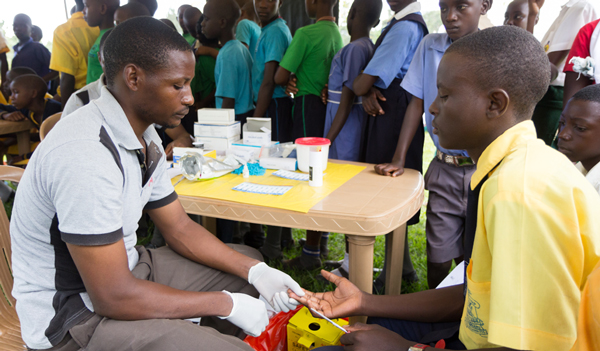
A system built on trust now in freefal, Uganda was long considered a gold standard in global HIV care. Decades of internationally funded work had established free clinics, peer outreach networks, community-based support, and medication access for some of the country’s most marginalised populations — sex workers, LGBTQ+ people, and men who inject drugs.
Megan Schmidt-Sane says, “You could walk in, get your counselling for free, medication refills for free. That showed up in the gains Uganda had in reducing new HIV infections and keeping people on treatment. That progress is now in serious jeopardy”.
The moment aid cuts were announced, chaos followed. HIV service providers were forced into impossible choices: fund antiretroviral medication keeping people alive, or fund the community outreach work home deliveries, peer support, trust-building that ensures people actually stay on treatment. Most cut the community side. The results have been devastating.
Megan Schmidt-Sane continues, “We’ve heard reports of young men sharing pills with their colleagues because they’re not sure about getting refills. In the worst cases, they’re skipping doses, making decisions based on uncertainty. That will have implications we’ll see for years to come.”
AWAC, which previously served over 11,000 female sex worker clients through its drop-in clinic, now struggles to reach even 15 a month with health services. Kyomya Macklean says, “It’s sometimes very painful when I share this. funding really lifted grassroots communities. It gave us hope, courage, inspiration — even when you’re living with HIV, you could still set your goals, give birth to children who are safe. Then all of a sudden, that ladder just drops.”
Bilateral deals leave the most vulnerable behind
The Trump administration’s shift to government-to-government bilateral agreements has compounded the crisis for marginalised groups. Unlike the previous funding model which could flow directly to community organisations, the new approach explicitly excludes civil society groups working with sex workers, LGBTQ+ communities, and people who use drugs.
For organisations that have spent years building trust with communities that fear and avoid government health facilities due to criminalisation, stigma, and discrimination this is not a bureaucratic inconvenience. It is an existential threat.
In Uganda, sex work is criminalised. LGBTQ+ people face the Anti-Homosexuality Act. Walking into a government clinic carries real legal risk. The community organisations now being defunded were the bridge between these populations and life-saving care. Without them, people are disappearing underground.
Innovation in the face of abandonment
Rather than wait to be rescued, community organisations are creating their own solutions establishing “community circles,” pooling resources, and even planning community-run health facilities in partnership with other affected organisations.
This self-reliance is born of necessity, not choice. But it carries a powerful message to donors, governments, and researchers: community-led innovation works and it deserves investment, not charity.
As Kyomya Macklean powerfully states: “Nothing about us without us.” Meaningful, equitable partnerships not top-down aid models are what will sustain HIV responses long-term. Communities must be at the table as partners, not recipients.
About the Between the Lines podcast
This podcast series explores ground-breaking ideas in development for positive social and environmental change. Each month we feature an interview with an expert in international development who will talk about their latest research and ideas.
Episodes content could feature authors of new books, IDS research or interviews with special guest stars.
The discussions give an insight on the themes covered, exploring the challenges and discoveries, and why the issues matter for progressive and sustainable development globally.
Send your comments and episode suggestions to [email protected]
Key contacts