Ahead of COP31 in Türkiye (9 – 20 November), IDS researchers call for critical minerals to be prioritised for clean electrification and a just energy transition, as the UN warns that a “massive global scale-up” of renewables is required to get global temperature targets back on track.
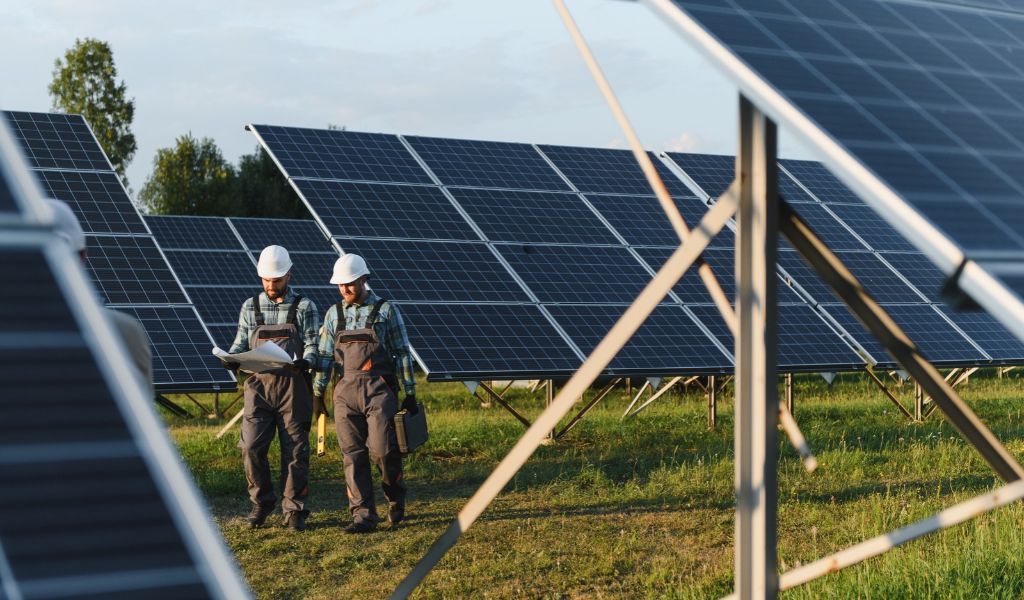
Critical minerals, like lithium cobalt, nickel, and rare earths are vital components for solar panels, wind turbines and electric vehicle technologies. However, demand for critical minerals from other sectors, such AI, is rising and amid heightened geopolitical rivalry and rearmament, demand from the defence sector has been growing fast.
Forthcoming research by Anabel Marin and Phil Johnstone for the Transition Security Project highlights concerning trends in this regard. Based on data from the International Energy Agency, they find that only 29% of copper and 17% of nickel and 20% of rare earths were used in energy technologies in 2024.
They also estimate that military applications account for around 10% of global copper consumption, while defence and aerospace account for 33% of chromium and 17% of beryllium. Of 36 rare minerals used in strategic technologies, drones require all of them, compared with around a dozen each for solar panels and wind turbines.
Prioritise critical minerals for renewables, not war
With this growing competition for these scarce critical minerals, IDS researchers warn that to achieve climate goals, critical minerals must be prioritised for renewable energies and not diverted for use in defence systems and weapons of war.
Anabel Marin, Senior Research Fellow, Institute of Development Studies, said:
“Despite being extracted in the name of the transition, critical minerals are increasingly used for other agendas, including data centres, and fossil fuel infrastructure and – most concerningly – in defence.
“At next week’s COP31, military use of minerals must be part of the climate change discussions. International leaders need to recognise that the scale of the energy transition required cannot be achieved without peace.”
In addition to discussing the military use of minerals at COP31, and prioritising them for uses that serve climate goals, IDS researchers recommend that countries report demand for critical minerals by use, including military, and support including destination and use in the global traceability framework proposed by the UN Secretary-General’s Panel on Critical Energy Transition Minerals. They also advocate for reciprocal transparency to be built into critical-minerals partnerships, along with support for mineral producing countries to develop traceability to final destination.
China’s role in renewables globally
One of COP31 priorities is to increase the global electrification rate to 35% by 2035. Progress on the renewable energies that rely on critical minerals has been made, with solar and wind power leading the way for increasing renewable electricity production. Countries including China are contributing to those energy transition projects globally, but much more progress is required. Only solar photovoltaics and electric vehicles are on track to meet 2050 Net Zero Emissions targets.
IDS, in partnership with the International Institute of Green Finance (IIGF), has been tracking China’s role in renewables globally. New analysis from the latest quarterly report from ‘The Landscape of Chinese Overseas Renewable Energy Projects’ research shows how China’s overseas renewable energy engagement is expanding across power supply, storage, and the industries that support their deployment.
Solar projects supported by China – via finance or technological capabilities – remained the largest generation category, with wind and storage project numbers increasing year on year. Geographically South-eastern Asia has the highest number of renewable energy projects supported by China, while several large developments are underway in Central Asia, Northern Africa and Western Asia.
For example, the Abydos II solar and battery storage project in Egypt combines Chinese engineering with international developers and development finance to deliver solar and storage infrastructure. In Malaysia, the Chinese company EVE Energy has its first overseas mass-production hub that will add 38 GWh of annual energy-storage battery capacity. The project illustrates a mode of Chinese overseas engagement that differs from mainstream project activities: manufacturing FDI (foreign direct investment) that builds a host-country industrial base, rather than the delivery of a generation asset.
Find out more about IDS research on critical minerals: