

Demand for minerals like nickel, lithium, copper, and rare earths is set to grow by up to four to six times by 2040. For resource-rich countries across Asia-Pacific, Africa, and Latin America, this looks like a historic window.
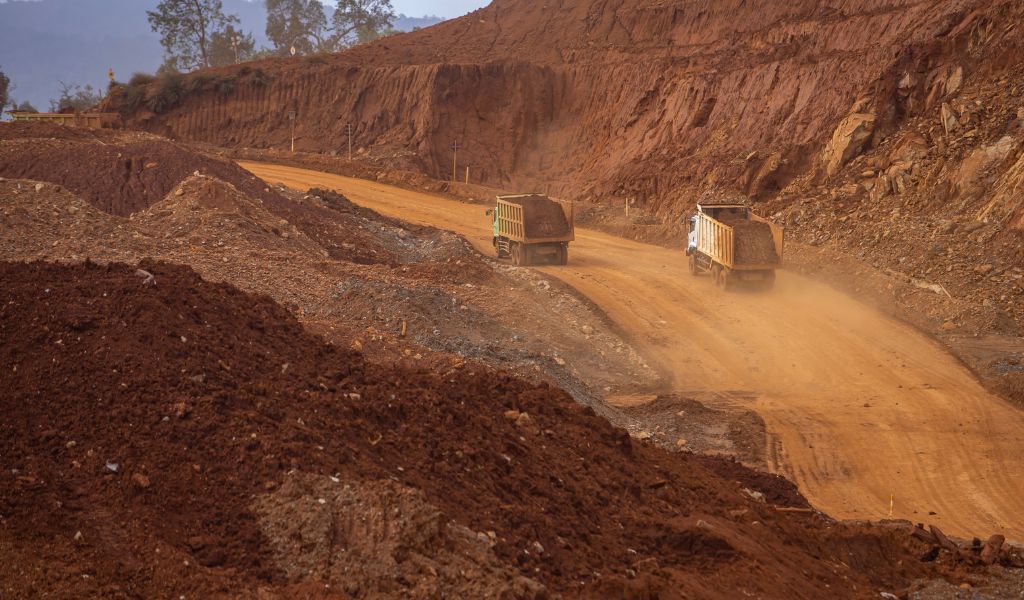
An opportunity for structural transformation, building capabilities and moving beyond the extractive model that has left so many mineral-rich economies with depleted resources and limited development to show for it. Will countries follow the policies of Indonesia that led to its remarkable success with nickel over the past decade or are there other alternatives?
Indonesia has emerged as the dominant reference point for how to respond to the critical mineral surge for good reason. Between 2015 and 2024, Indonesia went from producing 6 percent of the world’s nickel to over 60 percent. It built more than 40 smelters and moved from virtually no presence to 30 percent of world supply of battery-grade nickel.
The policies that led to Indonesia’s success are well known: export bans on unprocessed ore, conditioned foreign investment, integrated industrial parks – and they have attracted enormous attention from governments elsewhere. And they have transformed the policy debate. In many countries, value addition has become almost synonymous with downstream processing. Zimbabwe has restricted raw lithium exports, and several African governments are exploring similar strategies. The appeal is understandable. But before others reach for the same toolkit, it is worth asking more carefully: why has it worked and about alternatives?
What made it work – and at what cost
Much of the discussion about Indonesia focuses on the export ban. And that focus is not wrong. Indonesia made consequential choices, and it made them well. But those choices worked because they were well-matched to a very specific configuration of conditions. They included exploding global demand and China’s need to move production offshore; a China–Indonesia strategic alignment that channelled capital at scale; an available but dormant processing technology (HPAL); vast reserves, cheap coal, and cheap labour. They also had a centralised political authority able to sustain the export ban for years; and a fragmented domestic mining sector with no strong processors capable of resisting change.
The policies did not create these conditions – conditions and policies co-evolved. The Indonesian government read the moment well, and the conditions made the policies work. Remove any one of them and the outcome changes entirely.
Any country serious about its mineral strategy needs to understand its own conditions deeply before reaching for the Indonesian policy toolkit. It should also consider the potential costs from the very beginning.
In the case of Indonesia, the rapid growth in extraction and processing brought significant costs. To mention just a few: Indonesia’s nickel industry is overwhelmingly powered by captive coal plants, and most facilities produce between 57 and 70 tonnes of CO₂ per tonne of nickel. In communities near the Weda Bay industrial park – Indonesia’s (and now the world’s) largest nickel mine – respiratory infections increased more than 24-fold between 2020 and 2023.
Meanwhile, Chinese firms still control approximately 75 percent of refining capacity, and 94 percent of Indonesian nickel exports went to China in the first half of 2025. Indonesia produces more – but much of the knowledge, the technology, and the margins remain elsewhere. Repositioning in the value chain is not the same as upgrading within it.
Are there alternatives?
Indonesia followed the pathway that dominates current thinking about mineral value addition: downstream processing: moving from raw ore to refined metal to battery components. With China’s dominance in processing, controlling these stages might give countries leverage and bargaining power that raw ore exports simply do not.
But downstream processing also carries costs less often discussed: it is capital- and energy-intensive, generates limited employment, and is dominated by a handful of large, vertically integrated incumbents. It typically produces another commodity rather than a diversified industrial base. In addition, its environmental burden is significant. Downstream processing is among the most polluting stages of mineral value chains, increasingly being moved to countries with weaker regulatory capacity as China tightens its own standards.
Two other pathways carry real potential, and deserve more attention. The first is building knowledge-intensive upstream capabilities: investing in geological expertise, environmental management, extraction technologies, automation, low-carbon approaches – not expanding extraction, but making it more sophisticated. The better a country understands its own resources, the stronger its position to negotiate, attract partnerships, and improve outcomes. It is less dramatic than building a smelter, but likely more durable.
The second is supporting supplier ecosystems: local firms providing services to mining – engineering, environmental management, software, water treatment, logistics. This pathway is more accessible than downstream processing, builds on capabilities countries often already have in partial form, and over time reduces dependency on the resource itself.
Chile: upstream by design, enabling by choice
Chile is an excellent example of a genuinely different model. It has not achieved dramatic downstream repositioning but it has experienced a transformation that deserves more understanding.
Some numbers tell the story. Today, 67 percent of Chile’s copper mining electricity comes from renewable sources, up from 44 precent in 2021. Similarly, 41 percent of mining water now comes from the sea, heading to 68 percent by 2034, thanks to major desalination investment and the engineering knowledge to pump seawater to high-altitude mines across a desert region.
These are not operational tweaks, but upstream innovations built on sustained capability-building – transferable knowledge now applicable elsewhere. Together, they are building a distinctively Chilean brand of green copper, with the potential to command a price premium and anchor long-term partnerships with clean-energy manufacturers.
Mix of sustained policies
In contrast to Indonesia, this was not built overnight or through a single dramatic intervention, but through a mix of policies sustained over decades: enabling instruments, direct state involvement, and strict environmental regulation.
Enabling instruments include government-funded R&D, innovation obligations written into operating licences, supplier development programmes, and renewable energy frameworks.
On regulation, water rules in the north stand out: penalties for freshwater over-extraction and mandatory impact assessments pushed desalination before it was economically attractive, reinforced by civil society pressure.
On state presence, Chile’s National Copper Corporation (Codelco) – the world’s largest copper producer – has anchored knowledge, innovation, and R&D, leading the shift toward renewables that private operators have since followed. This model was recently extended to lithium: in December 2025, Codelco and Sociedad Química y Minera de Chile SA (SQM) created Nova Andino Litio, a partnership in which the state holds majority control and captures 70-85 percent of the operating margin from Atacama lithium production until 2060.
This transformation has not happened without challenges: ore grades are declining, processing capacity remains limited, and supplier ecosystems have yet to reach the scale the sector demands. But its capabilities have compounded – slowly and steadily – over time.
Diagnose before you prescribe
Two countries, two minerals, two pathways – and the lesson is not which model to copy, but that strategy must start with an honest diagnosis of a country’s own conditions: its resources, capabilities, institutions, and the costs it is willing to bear. There is much to learn from Indonesia and from Chile. But the goal is not to become either of them, it’s to become a new success story.