Development stands at a pivotal moment. Multilateralism is in decline and nationalist approaches are on the rise; there is little support for development cooperation; and the rules-based international political order has been exposed for its weaknesses.
The geopolitical consensus that prioritised the Sustainable Development Goals (SDGs) is shifting amid political and economic turbulence, nationalism, precarity and polarisation.
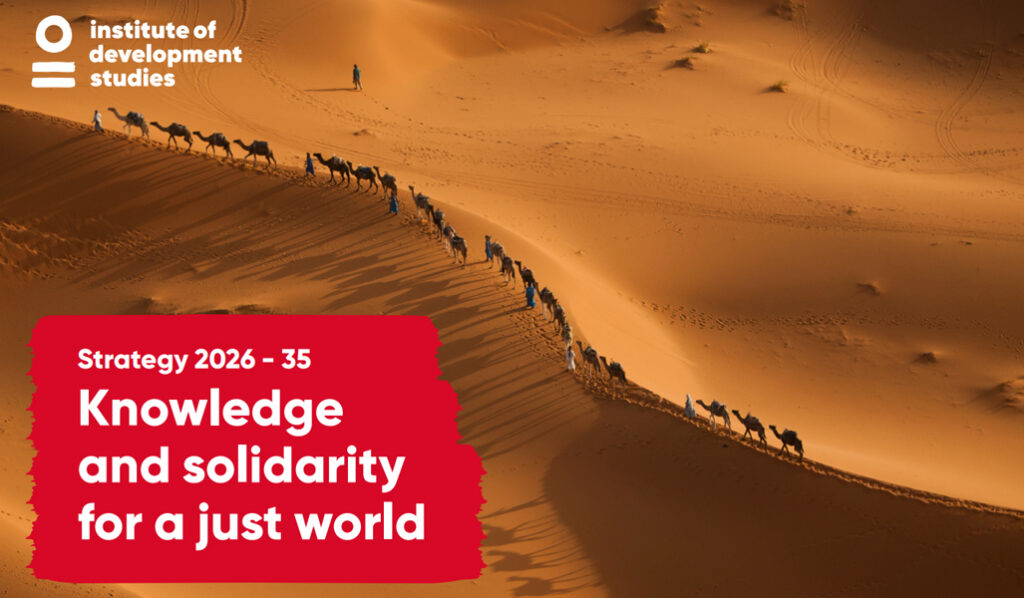
These shifts are hitting hardest vulnerable groups and communities who were already at the margins of society. Increasing unpredictable conflicts, economic instability, extremes of climate, and fluctuating political priorities mean that the old forms of resilience and policy support may no longer work.
Solutions that address these issues require strong understanding of local realities and constraints as the localisation agenda intends; but progress in many contexts has been undermined by declining support for development cooperation and political constraints of the current moment.
In this context, the 2026-35 strategy for the Institute of Development Studies aims to create major impacts:
- Transforming knowledge to improve lives
- Mobilising new leadership for economic equality, social justice and environmental sustainability
- Shaping policies and practices through research, learning, and engagement with decision-makers