

Will future wars be fought over water? Global policymakers, politicians and the media promote a sense of catastrophism about the impact of climate change on cross-border water management between countries. These ‘climate water war’ narratives promote anxiety over water scarcity and often surface when droughts hit the headlines, but how likely are climate-change-induced water wars to occur in the future? Recent events suggest the story is more complicated—and far less apocalyptic than the popular scarcity narratives imply.
A treaty in trouble
In April 2024, India announced it was placing the Indus Waters Treaty ‘in abeyance’. The phrase is legally ambiguous, absent from the treaty itself and unrecognised in international law, but its political message was clear. Coming after a deadly terrorist attack in Kashmir, the move signalled that water – long insulated from geopolitics between India and Pakistan – was no longer untouchable.
For over sixty years, the Indus Waters Treaty had survived wars, diplomatic breakdowns, and recurring crises. Signed in 1960 with World Bank support, it carved out a delicate but lasting compromise, with India controlling the three eastern rivers of the Indus River Basin, whereas Pakistan would rely on the three western rivers. Its suspension reflects more than a bilateral dispute. It raises urgent questions about water security and its role in the new illiberal order and amid rising nationalism, and how the impact of climate change on water security is changing how governments globally are thinking about transboundary water relations.
The myth of water wars
The Indus Waters Treaty moment in 2024 taps into a familiar idea: that climate change will inevitably lead to wars over water. From Hollywood plots to media headlines predicting that water will replace oil as the primary source of conflict, the message is clear: scarcity plus climate change equals violence.
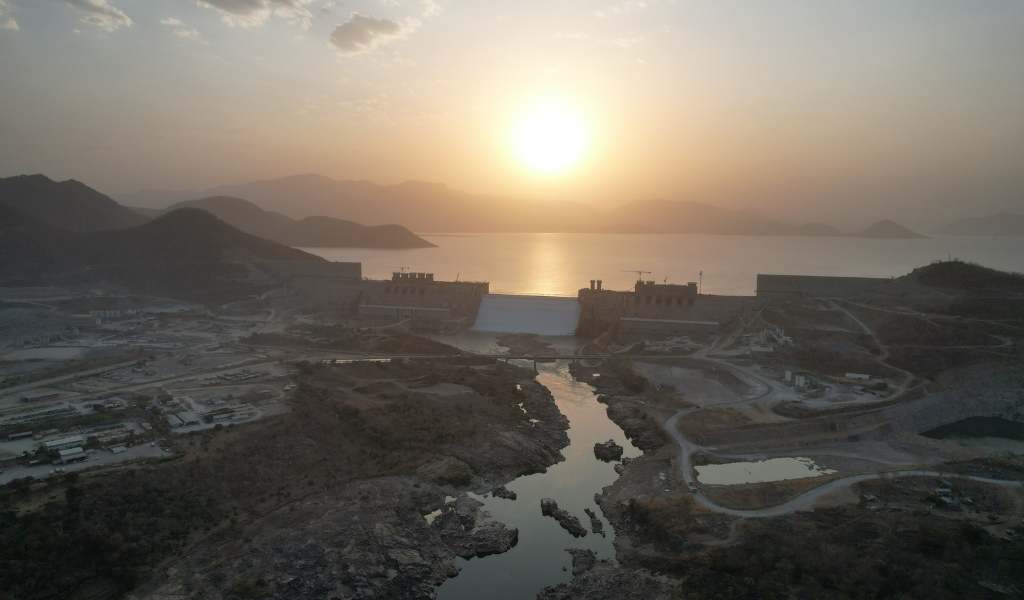
High-profile disputes seem to reinforce the point, with commonly cited examples including tensions over Ethiopia’s Grand Renaissance Dam, clashes between Iran and Afghanistan over the Helmand River, or concerns in South Asia over China’s upstream dam building. ‘Climate water war’ narratives also point to the weaponisation of water in conflicts such as Gaza or Ukraine, where fresh water infrastructure is deliberately targeted and destroyed. And examples are not limited to international conflicts, with advocates of water war theories pointing to the role of drought and water scarcity in civil wars, such as those in Syria, Sudan or those surrounding Lake Chad. However, the evidence for these claims is disputed.
To really better understand the connections between water, climate change and conflict, we need to look back in history and the dynamics of transboundary water relations beyond recent claims and singular events.
What history tells us about ‘water conflict’
First, most claims of ‘water conflict’ rely on an expansive definition. Attacks on infrastructure, water shortages during war, or even political rhetoric often count as evidence. This blurs an important distinction: water as a cause of war versus water as a tool or casualty of war.
Second, these narratives assume a simple logic: less water means more conflict. In reality, scarcity is shaped by politics, infrastructure, technology, and power. Water can be scarce because of mismanagement or inequality, not just because rainfall declines. Treating scarcity as destiny obscures the many ways societies adapt and cooperate.
The result is a form of climate catastrophism that offers certainty where uncertainty dominates.
Water nationalism
The principle of water nationalism – that water is an extension of national territory -emerged with the modern nation-state. As empires collapsed and borders hardened, rivers that once flowed within a single polity suddenly crossed multiple states. Today, there are 263 transboundary river basins – crossing several country borders – providing about 60 percent of the total freshwater to humankind.
Historically we can see that water became central not only to economic development but also to national identity. States named dams after leaders, used megaprojects as symbols of progress, and embedded water landscapes into nationalist narratives. Over time, international law softened these claims. Treaties and global norms promoted cooperation, and the 1997 UN Watercourses Convention enshrined principles of equitable use.
Yet today, these norms are under pressure. Illiberal politics prioritise sovereignty over multilateralism. India’s stance on the Indus Treaty fits this pattern, as do similar tendencies elsewhere.
What the evidence shows
And the evidence tells us that water has rarely been the primary cause of war. In fact, cooperation over water is far more common than conflict. Since 1945, approximately 300 treaties dealing with water management and allocations in international basins have been negotiated. Given this volume of transboundary water management, the historical view shows us that there have actually been remarkably few conflicts over water – with only a handful of disputes that can plausibly claim water as a significant cause of violence.
Even in unequal river basins, states often find ways to cooperate. This does not mean cooperation is fair – power asymmetries persist – but it does mean that water wars are not inevitable.
The real crisis: human security
Climate water war theories in my view are missing the bigger picture, and the real water crisis of our time, which is how environmental changes are affecting human vulnerabilities and well-being. Instead of focusing on potential conflicts over river basins and damns, the focus should be on the billions of people who live with water scarcity, unsafe water, and poor sanitation. The 1,000 children who die every day due to unsafe water, sanitation and hygiene dwarf the casualties associated with violent conflict. No act of terrorism generates economic devastation on the scale of this crisis in water and sanitation. Yet the issue barely registers on the international agenda.
Moving beyond myths
Scarcity narratives are fuelling the spectre of climate change-induced water wars. The dismantling of the global liberal wider and the growing influence of illiberalism could favour the resurgence of sovereign rights over transboundary resources, as seen in the recent Indus Water Treaty dispute. However, history tells us that water wars are unlikely to occur.
Water war narratives tend to reflect linear assumptions suggesting a false sense of certainty. Policymakers and the general public tend to resist uncertainty and contradictory facts, but we need to see transboundary water relations in the context of climate change as we have seen through history, an issue dominated by power and politics and marked by uncertainty and social complexity. Water wars are not inevitable. If we are serious about water security, the task is not to prepare for wars, but to strengthen cooperation, ensure safe water and sanitation for all, and resist nationalist shortcuts.
This blog is a summary of the article Will Nationalism, Illiberalism, and Climate Change Lead to Water Wars? published in the Current History journal.