



Falling trust in institutions, rising inequality, and the rise of authoritarian leaders is driving democratic backsliding around the world. The number of autocracies in the world now surpasses the number of democracies for the first time in 20 years. In our new report ‘Where’s the demos in Democracy?’ we show that an important driver of democratic decline is political exclusion and inequality, with states failing to meaningfully engage people in democratic practices.
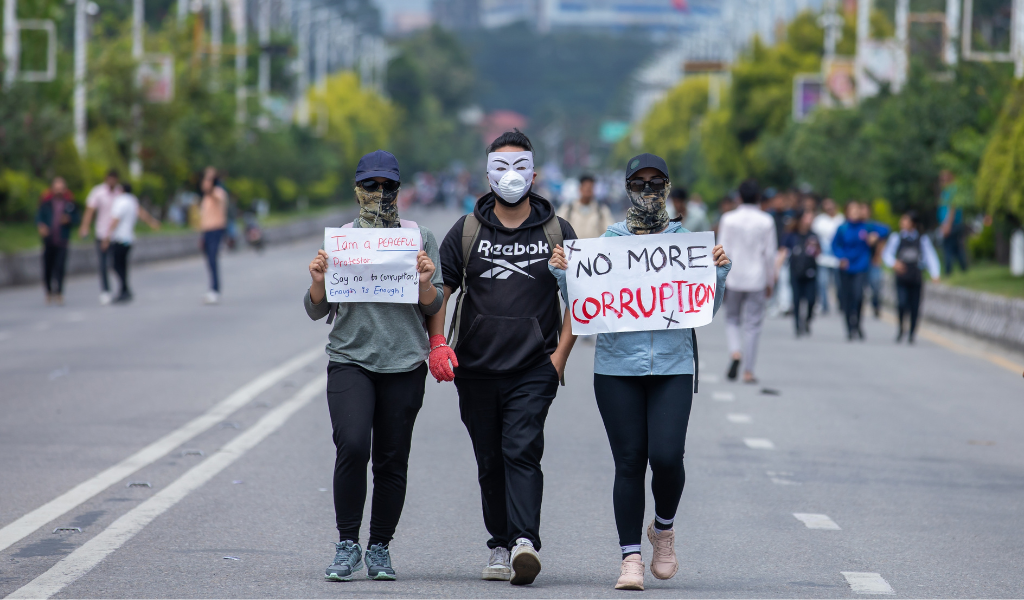
Attempts at strengthening democracy have focused too much on building institutions such as the judiciary and electoral systems. While these are all necessary for a healthy democracy, these attempts have ignored the missing ingredient, which is people.
When citizens are excluded from a role in policy and decision-making spaces, it leads to what is known as ‘hollow citizenship’ – where they are citizens in theory but not in practice. And to save democracies from further declining, politicians and leaders must tackle political exclusion of citizens by actively including them in the decision-making process and improving their engagement with democratic institutions.
Where has democracy gone wrong?
Across the world, large sections of society feel excluded from political decision-making, even in countries with long-standing democratic traditions. More than two-thirds of people worldwide feel that they have little influence over the decisions of their government. This sense of powerlessness, combined with rising inequality, online polarisation, and distrust in the government creates fertile ground for exclusionary and authoritarian politics. When leaders ignore inequality and political exclusion at their peril, anti-democratic actors exploit this to stoke division, and lead people to question whether democracy works for them.
Discover more of IDS’ work on democracy
However, from previous research on democracy, there is enough evidence to show that democracy delivers better social and economic outcomes than any other forms of regime. At a time when trust in democracy is eroding, this evidence is an important reminder of what is at stake.
Recentring the dēmos
Even with strong formal institutions in place, democracy cannot function meaningfully without the active participation, agency, and inclusion of people, that is the dēmos itself. The current crisis is not just about failing institutions, but about a disconnect between democratic systems and the citizens they are meant to serve. Citizens are frequently treated as passive recipients – voters, beneficiaries, or service users – rather than active agents capable of shaping political processes.
Democratic engagement is not simply about voting every few years, but about ongoing engagement where citizens are able to claim rights, participate in decision-making, and hold power to account. This can take many forms, from grassroots organising and social movements to everyday acts of civic participation.
The eight building blocks
Our report proposes a more grounded and people-centred vision of democracy that is structured around eight building blocks:
Building active citizenship
For a healthy democracy, it is important to move beyond narrow definitions of citizenship tied to a person’s legal status or birthplace, and instead enable people to claim rights, participate in decision-making, and engage with public authorities in meaningful ways. Refugees and other marginalised groups who lack formal citizenship status also engage in active citizenship. Meaningful participation can be built by strengthening people’s capabilities, confidence, and collective agency so they can shape decisions that affect their lives not just during elections, but in everyday governance processes. External actors can support civil society actors who are opening civic spaces that support active citizenship.
Supporting informal mobilisation
Informal political participation is important as an expression of active citizenship, especially where formal channels for participation are inadequate. Many transformative rights from labour protections to gender equality have been achieved through such mobilisation, particularly where formal institutions have failed to respond. Non-violent forms of mobilisation are more inclusive and attract more women, leading to their visibility, resilience, and effectiveness of movements, as numbers count. To support informal mobilisation, it is important to recognise that protests, social movements, and everyday forms of organising are not disruptions, but essential democratic practices that expand participation and accountability.
Reclaiming digital agency
Digital citizenship can be a powerful tool for uniting citizens to confront injustice. In recent decades, digital technologies were seen as tools for democratisation, improving transparency and accountability. However, governments that support a descent into authoritarianism have harnessed digital technology using tactics like mass surveillance and internet shutdowns to suppress dissent and human rights. It is vital to reclaim digital spaces. Citizens are finding ways to respond to such digital authoritarian practices. Different methods include use of virtual private networks, using software to detect surveillance, changing phone numbers every six months, using multiple phone numbers, and engaging in advocacy.
Strengthening civil society organisations
Even in restrictive contexts, bottom-up, self-organised civil society organisations and movements plays a crucial role in maintaining civic space, fostering collective action, and nurturing what the report calls ‘democratic stock’ within society. At a time when civic space is shrinking, supporting grassroots organisations and enabling new forms of participation becomes even more urgent.
Democracy support channelled through or involving Northern NGOs is needed to maintain democratic alliances, especially when working transnationally and at scale. But it needs to be committed to decolonial approaches that shift power dynamics to equal and collaborative relationships between Northern and Southern organisations, which applies not only to democracy support but international development more broadly. It is crucial to support grassroots and community organisations that build democratic culture, amplify marginalised voices, and sustain participation beyond elections.
Addressing polarisation
In increasingly polarised contexts, pro-democracy CSOs that had focused on pushing for rights and recognition from the state, now need to also target other societal groups and citizens that promote anti-democratic agendas.
Civil society actors can play an important role in facilitating such dialogues that can bridge divides, counter exclusionary narratives, and rebuild trust. In everyday life, citizens can promote counter-narratives that emphasize rights and inclusion to help prevent the gradual normalization of exclusionary discourse and practices. This requires deliberate efforts to create inclusive forums both online and offline where diverse groups can engage constructively and re-establish shared democratic norms.
Enhancing accountability mechanisms
Accountability mechanisms play a significant role in halting democratic decline. But accountability reforms challenge entrenched powerholders who would lose out from an increase in transparency and increased protection of citizens’ rights and entitlements. However, informal mobilisation and civic action apply pressures and demand accountability by ensuring that governments remain answerable to citizens not only through elections, but through ongoing scrutiny, transparency, and civic pressure. This includes strengthening formal checks and balances, while also supporting social accountability approaches such as citizen monitoring and collective action that enable people to demand answers and enforce change.
Expanding participation through informal institutions
In a political process, citizens also engage with informal institutions that lie partially or wholly outside of the formal state structure. These institutions determine who citizens will engage with, how, and why, and are especially critical to individuals resolving grievances and addressing everyday concerns. Therefore, recognising the role of community networks, local leaders, and informal systems in shaping how people engage with politics in their daily lives is equally important. In many contexts, these informal institutions are more accessible and trusted than formal state structures and can serve as critical entry points for inclusive participation and service delivery.
Sustaining support for democratic practice
As funding decreases, cuts to governance and democracy aid will weaken the ability of many civil society actors to expand efforts that support democratic resilience, at a time when democracy and human rights advocates already face growing legal restrictions in many countries. When focused on achieving democratic outcomes, external support can constrain state repression even during periods of sustained protests, promote accountability, strengthen democratic institutions, and create spaces for participatory governance.
It is important to reverse the decline in funding and political commitment to civic participation and democratic engagement globally. This includes supporting long-term, flexible funding for civil society and building transnational alliances that can respond to shrinking civic space and rising authoritarianism.
In conclusion, supporting democracy cannot be limited to institutional reforms or top-down interventions. It must involve listening to, learning from, and working alongside citizens, particularly those who have historically been excluded. In a time of democratic backsliding, reconnecting democracy with the people it serves may be the most urgent task of all.