Can you help shape our future priorities? Take a five minute survey now. Survey closes on 8 July.

Credit: Bushra Saleem

Where's the demos in demOcracy?

Democracy is in crisis: but we can make it more resilient through building better connections with people.

Falling trust in institutions, dissatisfaction with democratic governments, and the rise in authoritarian leaders is driving democratic backsliding.

Our new report identifies how inequality and political exclusion is turning people away from democracy. But, the report argues, a renewed focus on engaging citizens in democratic systems and institutions can help to arrest the decline.

Read the news story: Tackling political exclusion is central to saving democracy, report finds
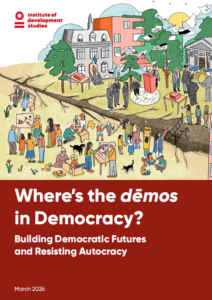
Report front cover with the words "Where's the demos in Democracy?" and a coloured illustration of people in the top half of the image

Where's the demos in Democracy? Building Democratic Futures and Resisting Autocracy

Our new report shows that there is an urgent need to rethink democracy by centring people, power and inequality, and puts forward eight building blocks for resisting democratic decline.

Read the report
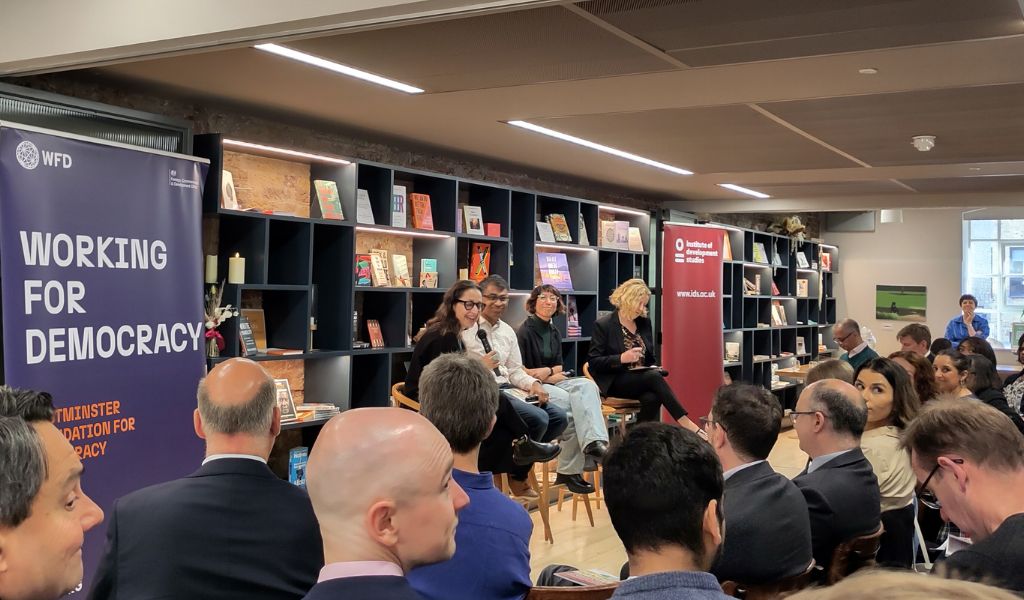
Eight building blocks for stronger democracy

Read the blog

"Engagement in democratic spaces can generate a sense of rights and citizenship, build practical experience with participatory processes and collective action, and generate alternative visions for those who are often marginalised from decision-making. These are important prerequisites for maintaining or strengthening democratic resilience within society."

Building block 1: Active citizenship

"Informal mobilisation in claimed spaces at scale has led to the realisation of new rights and recognition for women and minorities in diverse contexts, including through grass-roots mobilisation and social movements."

Building block 2: informal mobilisation

"Whereas authoritarians can use technology to silence citizens’ voices, citizens can and do respond by building digital citizenship. This can be a powerful tool for uniting citizens to confront injustice. An additional strand of action is for more nationally relevant research on surveillance."

Building block 3: digital agency

"Even in challenging political environments, bottom-up, self-organised civil society organisations (CSOs) and movements offer an avenue for citizens to learn about their rights and to gain the confidence and skills needed for mobilising, interacting with public authorities, and participating in decision-making processes."

Building block 4: Civil society organisations

"How can dialogue be established between opposing groups? Civil society actors can play an important role in facilitating such dialogues, given their vast experience with organising inclusive dialogue and exercises in deliberative democracy."

Building block 5: de-polarisation

"Social accountability includes mechanisms such as citizen juries, citizen assemblies, and community report cards, through which citizens directly demand accountability from providers. Other examples highlight citizens’ pivotal role in accountability through vertical aggregation, where local people escalated their service claims to higher authorities."

Building block 6: accountability mechanisms

"Citizen engagement in political processes is shaped not just by the nature of formal institutions but also by informal institutions and authorities that lie wholly or partly outside formal state structures and take on various governance-related functions."

Building block 7: political participation through informal institutions

"Cuts to governance and democracy aid will weaken the ability of many civil society actors to expand efforts that support democratic resilience, at a time when democracy and human rights advocates already face growing legal restrictions in many countries."

Building block 8: more effective donor support
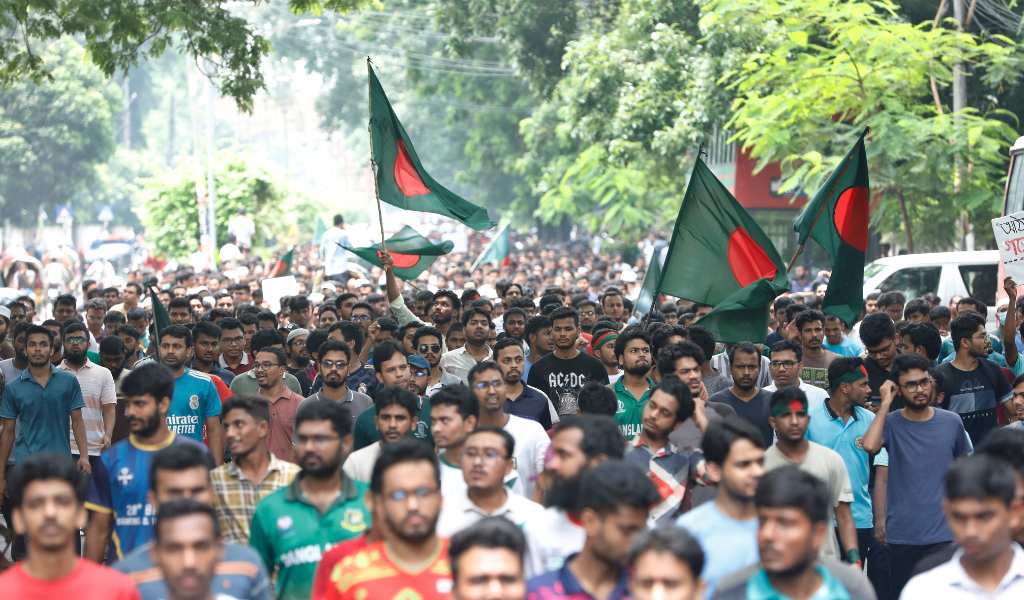
A dense crowd of people marching outdoors. 3 green flags with red circles are being waved. Trees are in the background and the crowd stretches back to the horizon.

Student views on democracy

Understanding democracy is central to development studies.

From democratic transitions in The Gambia to Zohran Mamdani’s election in New York, read perspectives on resisting democratic decline from current IDS students.
Find out more

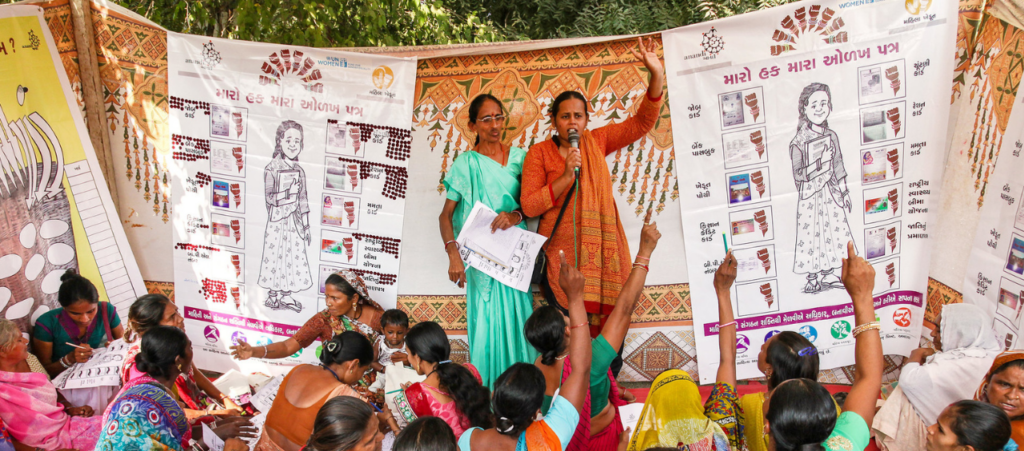
A group of 20 women in saris sitting on the floor, four with their hands in the air. Two women in sarism one holding a microphone, address them. There are posters in the background.

Study with us

Embark on an MA Governance, Development and Public Policy with IDS. You’ll build an understanding of debates on political change and how public authority is created and exercised, improving your ability to develop and implement policies across state and non-state organisations.
Find out more

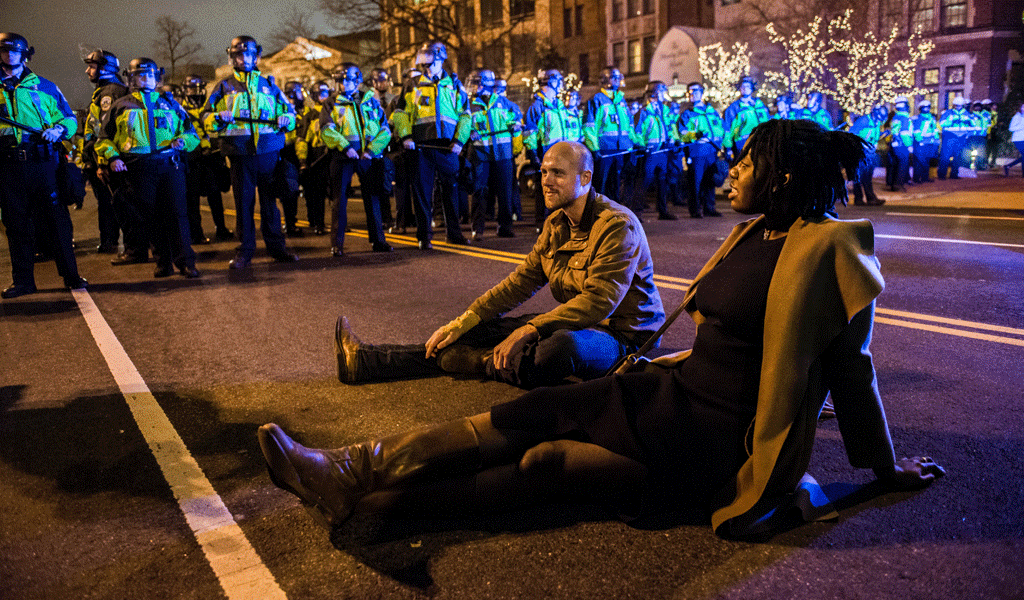
A photo of a man and a woman sitting on the ground in a street, in Washington DC. In the background are riot Police lined with riot shields and battons.

Identity-based narratives fuel rise in autocracy

A special issue of our journal, the IDS Bulletin, reveals how identity-based narratives centred on religion, race, gender, and nationalism are influencing citizens and their voting choices.

Read more

Privacy Overview

This website uses cookies so that we can provide you with the best user experience possible. Cookie information is stored in your browser and performs functions such as recognising you when you return to our website and helping our team to understand which sections of the website you find most interesting and useful.