Can you help shape our future priorities? Take a five minute survey now. Survey closes on 8 July.

Person

Lídia Cabral

Lídia Cabral

Research Fellow

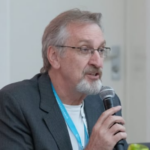
Lídia Cabral is a Research Fellow, Postgraduate Research Co-lead, and the IDS Convenor of the MA in Food Systems and Sustainable Development. She is an interdisciplinary social scientist whose current work focuses on equity, justice, and solidarities in food systems and relations, with particular interest in the politics of knowledge, technology, innovation and sustainable development discourse and practice.

Lídia has 25+ years of experience in international development, working mainly in Brazil, Sub-Saharan Africa and, more recently, in the UK. She began her career as a civil servant in Mozambique, working on development aid, sector budget planning, and public financial management. She later worked for Oxford Policy Management and the Overseas Development Institute, focusing on public policy and aid systems’ governance for agriculture and rural development. Over this period, she collaborated with several international organisations including the African Development Bank, FAO, the Global Donor Platform for Rural Development, IFAD, NEPAD, OECD, UNDP and UNEP, and bilateral aid agencies, such as Irish Aid, FCDO (formerly DFID), SDC, and SIDA.

After completing her PhD in Development Studies in 2016, Lídia joined IDS as Fellow and her work has focused on Brazil and international development, historical legacies and power in agrifood science and technology, and equity and justice in food systems. She has led research projects funded by the UK Economic and Social Research Council, the British Academy, and Newton Fund, and the British Council. She has collaborated with others on consultancies, policy advisory and advocacy work, and writing projects. In 2024, she was appointed member of the writing team of the High-Level Panel of Experts on Food Security and Nutrition (HLPE-FSN) report on Resilient Food Systems. She is a founding member of the Food Equity Centre.

Lídia is currently supervising three Postgraduate Researchers. Patricia Ortega (supervised with John Thompson) is researching the livelihood and resistance strategies of mango producers in Oaxaca, Mexico, in the context of the North American Free Trade Agreement. Evelyn Nunez González (supervised with Miguel Loureiro) is researching healthy diets and the best interest of the child in Mexico. Mansi Nimbhal (supervised with Nicholas Nisbett) is researching millets-based livelihoods and gender dynamics among Adivasi women in India.

Lídia welcomes PhD applications and collaborations on topics such as: food equity and justice in relation to different aspects of food systems; social innovation and transformative change in local food systems; Green Revolution legacies and counter-movements, including agroecology and regenerative farming; knowledge politics, discourse and storytelling; intersections between rewilding, food and justice; Brazil in the world and South-South cooperation, particularly in relation to food systems.

Projects

Programme & Centres

Research

Project

Building Back Better from Below (B4)

Harnessing Innovations in Community Response and Intersectoral Collaboration for Health and Food Justice Beyond the Covid-19 Pandemic The Building Back Better from Below project aims to understand social innovations and cross-sector collaborations that developed during the Covid-19 pandemic in...

Project

Just Food? A Mutual Exchange Network on Just Food System Transitions

This action-research project will establish a mutual exchange network on just food system transition including food system actors from four usually unconnected geographies. This will be a space for dialogue, exchange and learning between local food system actors working and advocating for...

Opinions

Opinion

Food as missing ingredient in Sussex Nature Recovery Strategies

As nations, experts and activists gather for COP30 in Belém/Brazil, local authorities in the UK are grappling with Local Nature Recovery Strategies (LNRS) to meet Nationally Determined Contributions. In Sussex, a region that hosts globally important biodiversity supporting wellbeing, farming...

Lídia Cabral
Lídia Cabral & 3 others

19 November 2025

Publications

Brief

Building Socio-ecological Just Landscapes: A Guide

IDS Policy Briefing 228

Climate change, biodiversity, and food are interconnected issues. Socioecological justice emphasises the intrinsic relationship between social and ecological systems and outcomes. It entails the equitable distribution of environmental benefits, fair access to nature and resources, and meaningful...

Ruth Westcott
Ruth Westcott & 4 others

24 June 2026

Working Paper

Grass-roots Innovation for Justice in Urban Food Provisioning

IDS Working Paper 619

This paper draws on an international research collaboration to examine grass-roots innovations in food provisioning in five urban locations: Brighton & Hove, UK; Toronto, Canada; Montpellier, France; São Paulo, Brazil; and Cape Town, South Africa. It examines the innovative features of these...

Lídia Cabral
Lídia Cabral & 7 others

21 May 2025

Lídia Cabral’s recent work

Past Event

Food Equity Centre

HLPE-FSN Report on Food System Resilience

This webinar will present key insights from the latest report of the High-Level Panel of Experts on Food Security and Nutrition (HLPE-FSN), which introduces Equitably Transformative Resilience (ETR) as a novel approach to strengthening the resilience of food systems. Members of the report’s...

4 December 2025

News

Recent graduates author IDS Working Paper on food security

IDS graduates Callum Chapman and Norma Jean Park (MA Food & Development, Class of 2024) were lead authors on the IDS Working Paper Towards Transformative Change: Grass-roots Innovations for Food Security During Crises in Brighton & Hove, UK. This Working Paper analyses the emergence and...

7 April 2025

Privacy Overview

This website uses cookies so that we can provide you with the best user experience possible. Cookie information is stored in your browser and performs functions such as recognising you when you return to our website and helping our team to understand which sections of the website you find most interesting and useful.